NEWS. CULTURE. POLITICS. | |
| THE SCANNING NEWSLETTER / Nov 24, 2026 | |
|
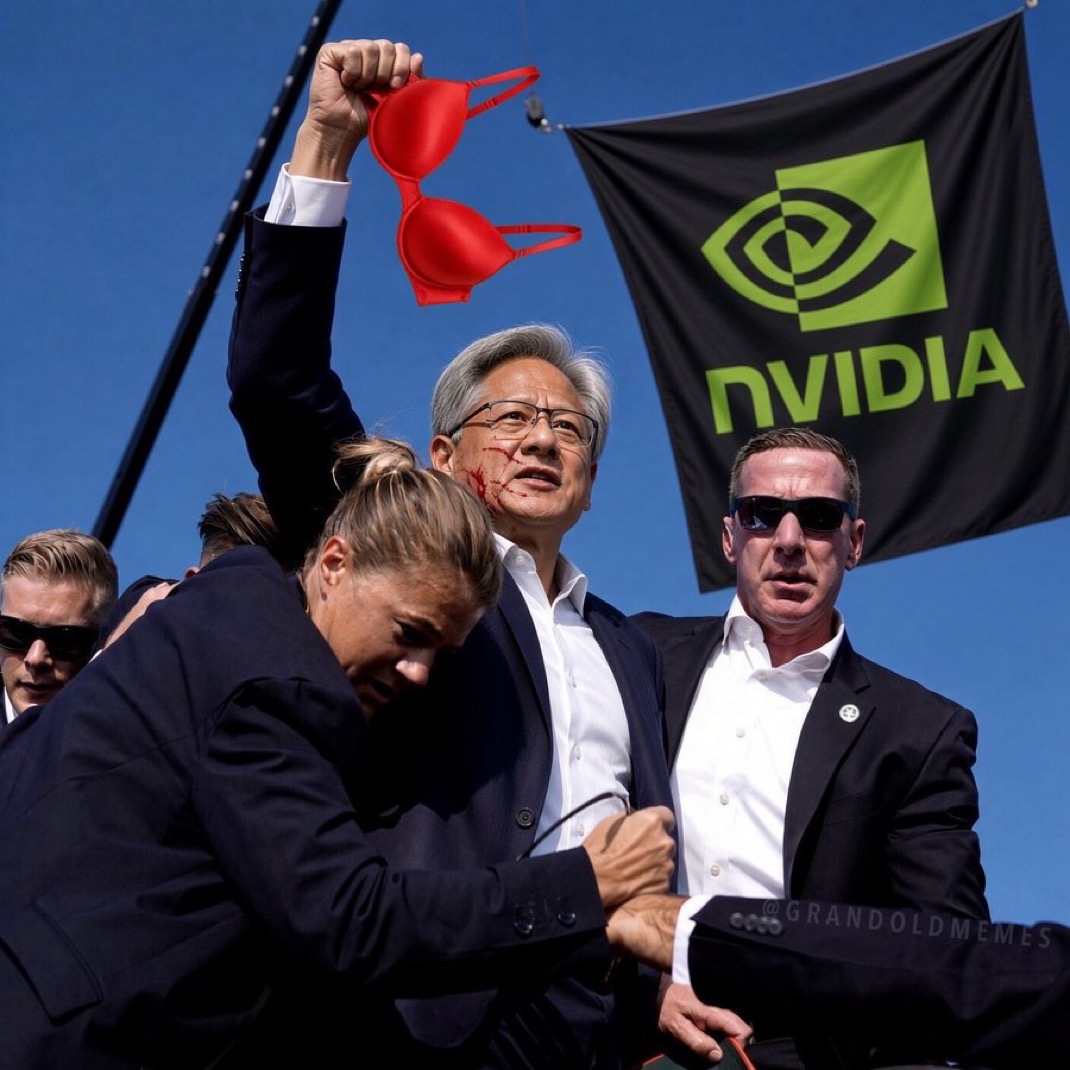
In the Evening, Scanners! Dana here. I've been looking at a few stories that, on the surface, don't seem particularly connected. The downfall and now return of Nvidia's Jensen Huang, the growing political opposition to AI and data centers, and evidence of Chinese influence operations targeting American political debates. But I think there's a common thread worth examining. We're in an increasingly important technological competition with China. And while we're busy fighting over whether we should even be building the infrastructure necessary to compete, China stands to benefit from just about every delay. How much of that is coincidence, and how much might be deliberate? That's where things get interesting. Jensen Huang is back. Now what?Well, that was quite a week. We covered the affair and espionage allegations surrounding Jensen Huang on last week's show. Since then, Nvidia has announced it's bringing him back as CEO, with the board unanimously supporting his reinstatement following consultations with U.S. government officials.
That's quite a reversal. Remember, just a few months ago, Huang was being celebrated as one of America's most successful CEOs. Then came the allegations, his resignation, and a market rout that wiped approximately $2.6 trillion from Nvidia's valuation. Now he's returning, but the consequences of the scandal haven't simply disappeared. What interests me most is how the story originated. Anonymous government officials leaked classified intelligence to the New York Times, despite the DOJ reportedly reaching no conclusion on the espionage allegations. CNN also reported that some intelligence officials questioned the evidence. And the timing was particularly convenient. The intelligence had reportedly been sitting in a government memo since the spring. Yet it surfaced just as Washington was debating additional restrictions on semiconductor exports to China. Within days, Commerce tightened chip shipments, the House passed the Remote Access Security Act 369–22, and Treasury Secretary Scott Bessent was calling for Nvidia to find an outside CEO. Now Huang is back, but those policy decisions remain. Was someone deliberately trying to remove one of the loudest voices opposing additional chip restrictions? Maybe. We certainly don't have enough evidence to say that conclusively. But somebody decided to leak that intelligence, and the timing deserves some scrutiny. And here's another interesting angle. Palmer Luckey has argued that while Huang supported selling Nvidia chips to Chinese AI companies, that doesn't necessarily mean Beijing wanted him around. China ultimately wants its own semiconductor industry, not permanent dependence on American technology. A weakened or distracted Nvidia might actually benefit Beijing, even if Huang eventually returns. Help us keep digging. Scanning is supported by listeners like you. If you value these conversations, make a one-time donation or become a monthly supporter. Your contributions help cover the research, recording, and production that go into every episode. China doesn't have to beat us if we stop buildingWhich brings us to the growing opposition to American data centers. OpenAI recently identified a likely China-origin influence campaign, called "Data Center Bandwagon," promoting opposition to American data centers over electricity costs. That's particularly interesting considering how quickly data centers have become a political issue. Democrats successfully campaigned against them during the midterms, and Bernie Sanders has since called for a national moratorium on data center construction. Think about that for a moment. We're competing with China for leadership in artificial intelligence, and some of our elected officials want to stop building the very infrastructure necessary to compete. I understand the concerns. Data centers consume enormous amounts of electricity, and it's entirely reasonable to expect developers to pay for the infrastructure they require rather than passing those costs onto residential customers. Water consumption is another legitimate concern, although some of the hysteria seems a little misplaced. American data centers reportedly consumed around 17 billion gallons of water on-site in 2023. Golf courses used roughly 550 billion. Somehow, I haven't seen a nationwide movement to shut down the back nine. There's a reasonable discussion to be had about where these facilities should be built and who should pay for them. But a national moratorium? That's an entirely different proposition. And China certainly isn't going to stop building AI infrastructure just because America decides to take a break. Follow the money to ShanghaiAs we discussed last week, our investigation into opposition to a Maryland data center led us to Neville Singham. Singham is an American businessman who sold his software company for $785 million, previously advised Huawei, and now lives in Shanghai. In 2023, the New York Times investigated a network of organizations associated with Singham that combined American progressive activism with messaging aligned with the Chinese government. More recently, congressional investigators have raised concerns about the network's funding, and federal authorities are reportedly investigating potential foreign-agent and tax violations. What's particularly interesting is that organizations associated with this network have also become involved in opposition to American data centers. The Bitcoin Policy Institute identified 21 anti-data-center campaigns connected to the Party for Socialism and Liberation across 14 states, linked to an estimated $23.6 billion in delayed or blocked investment. Now, does that establish that Beijing is personally directing these local zoning fights? No. And I think it's important to make that distinction. But it certainly raises questions about who is funding these campaigns and whether their objectives happen to align with China's interests. The bigger pictureHere's my theory. China doesn't necessarily have to defeat America economically or technologically if it can encourage us to slow ourselves down. We already have plenty of political disagreements. A foreign adversary doesn't need to invent new ones. It just needs to amplify the ones we have. A leaked intelligence report can destabilize an American technology company. A well-funded protest campaign can delay billions in infrastructure investment. A political movement can turn legitimate concerns about electricity prices into demands for a nationwide construction ban. None of these things individually proves Chinese involvement. But collectively, they raise an important question: who benefits when America stops building? Jensen Huang is coming back to Nvidia, which is probably good news for the company. But his return doesn't answer who leaked the intelligence, why they chose that moment, or whether the resulting policy changes will ultimately strengthen or weaken America's position. And I think we should be asking similar questions about the increasingly coordinated opposition to AI infrastructure. Maybe some of these connections are coincidental. Maybe others aren't. Either way, while we're busy fighting among ourselves, China is still building. We'll be digging further into these stories and whatever other craziness the world throws at us on Tuesday night's Scanning Podcast. One week left to become a Founding ProducerWe're still building Scanning, and your support makes that possible. Donate $100 or more by November 30 to become a Founding Producer, with permanent recognition on our show credits page. You'll always be part of the group that helped get this show off the ground. Support Scanning and become a Founding Producer To our Originating Producers, monthly supporters, and everyone who's donated or shared an episode: thank you. And if you haven't checked your account lately, your producer awards are waiting there. See you on the next transmission, Dana | |
| |
|
You’re receiving this because you signed up for the Scanning Podcast newsletter. Unsubscribe / Privacy / Contact © 2026 Scanning Podcast |